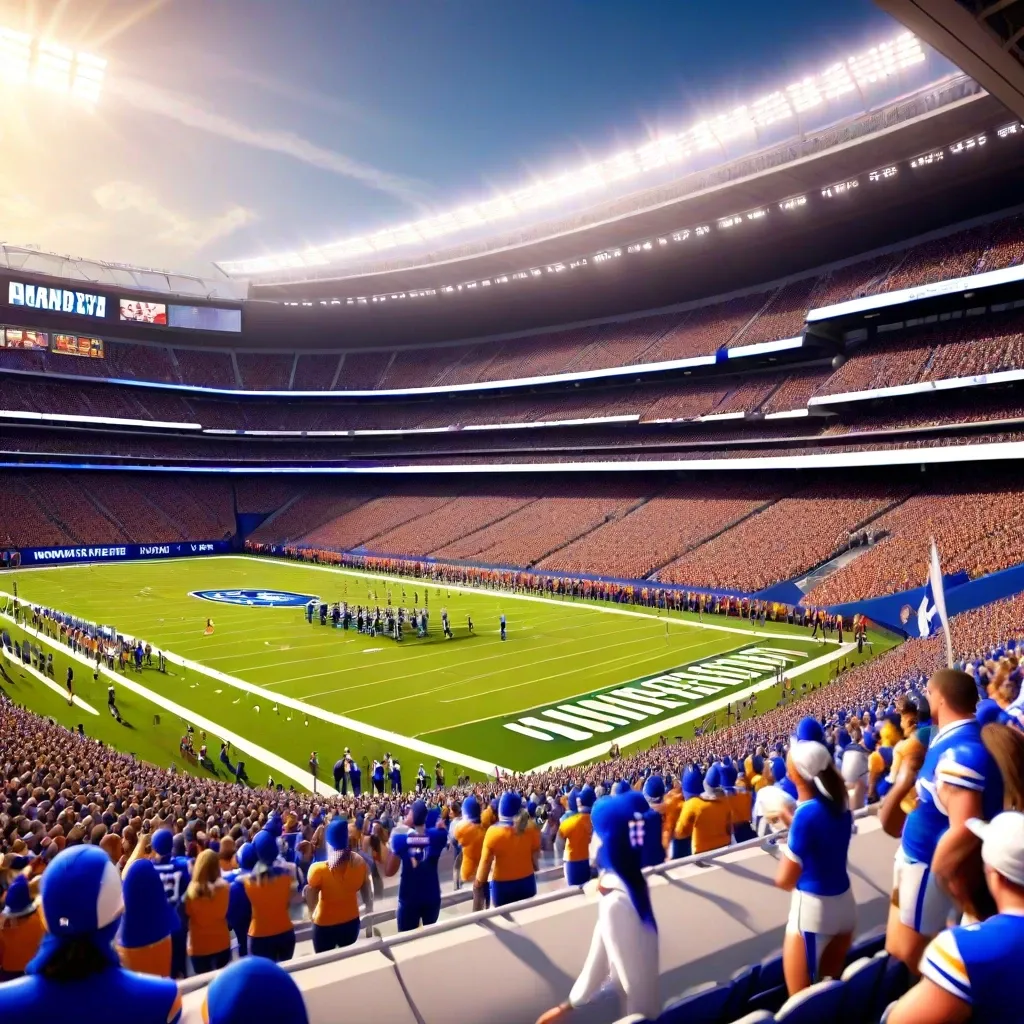
Does the roar of the crowd really translate into a Wild Card victory? The home field advantage – a time-honored concept in the NFL, especially when the playoffs roll around – often feels more like superstition than solid strategy. But what’s the real story? As an NFL analyst immersed in the gridiron trenches, I’m here to cut through the noise and dissect whether having home field in the Wild Card round is truly a golden ticket or just a psychological edge.
We’re diving deep beyond just wins and losses, exploring the underlying factors that either amplify or nullify the impact of playing on familiar turf. Forget the clichés and predictable takes. This is about uncovering actionable insights, fueled by data and experience, to reveal the genuine influence of home field advantage when the stakes are highest. Get ready to have your Wild Card assumptions challenged.
Historical Perspective: The Evolution of Home Field Advantage
The roar of the crowd, the familiar turf, and the comforts of home. These are the elements that have fueled the legend of home field advantage in the NFL playoffs for decades. It’s a narrative woven into the very fabric of football, painting a picture where victory is more attainable within the friendly confines of a team’s own stadium.
Historically, the belief in the power of home field advantage wasn’t just superstition; it was backed by tangible results. Teams like the Green Bay Packers in the Vince Lombardi era and the Pittsburgh Steelers of the “Steel Curtain” years built dynasties partially on their near-invincible records at home. Their stadiums became fortresses, intimidating opponents and providing a significant boost on game day. These legendary teams created an aura around their home fields, a psychological edge that seemed almost as crucial as the players themselves.
However, the evolution of football has seen the perception of home field advantage’s influence shift over time. Rule changes designed to promote offense, increased player mobility, and more sophisticated travel accommodations have arguably leveled the playing field. Coaching strategies have also adapted, with teams focusing on building rosters that can perform consistently regardless of location. While the energy of the home crowd remains a factor, its impact is now viewed through a more nuanced lens. Statistical analysis often debates the true extent of its contribution, acknowledging that while it still exists, its dominance may not be as absolute as in the past. The legend of home field advantage persists, but its role in the modern NFL playoff landscape is a subject of ongoing discussion and analysis.

The Numbers Game: Quantifying the Wild Card Home Field Edge
Does playing on familiar turf truly impact a team’s performance in the high-stakes atmosphere of the Wild Card round? The data suggests a tangible, though not overwhelming, advantage. Historically, NFL teams hosting Wild Card games have enjoyed a win percentage hovering around 60%. While this isn’t a guarantee of victory, it’s a statistically significant edge when compared to regular season home win percentages, which tend to fluctuate closer to the mid-50s.
Beyond simply winning, the average point differential in these games paints a more nuanced picture. Home teams typically outscore their opponents by a margin of approximately 3 points in Wild Card matchups. This suggests that the advantage isn’t just about squeaking out wins, but also about controlling the game’s tempo and exerting a moderate level of dominance.
Analyzing these statistics decade by decade reveals interesting trends. For example, the 1990s saw a higher home win percentage in Wild Card games compared to the 2000s. This could potentially be attributed to rule changes, shifts in offensive and defensive strategies, or even the evolving dynamics of fan support. The 2010s presented another shift, with some seasons displaying notable outliers – years where home teams were either remarkably dominant or surprisingly vulnerable.
While pinpointing the exact causes of these fluctuations remains speculative, it’s clear that home field advantage in the Wild Card round is a real, measurable phenomenon. Further analysis will explore the underlying factors that contribute to this edge, from crowd noise and travel fatigue to the subtle psychological impact of playing in familiar surroundings.
Beyond the Stats: Key Factors Impacting Home Field Advantage
Home field advantage in the NFL is more than just a statistical anomaly; it’s a confluence of intertwined elements that can significantly sway game outcomes. While numbers provide a baseline, understanding the nuances of crowd noise, weather conditions, coaching impact, team dynamics, and the psychological edge reveals the true depth of this phenomenon.
Crowd Influence
The roar of the home crowd is a palpable force in the NFL. It’s not just background noise; it’s a weapon. The sheer intensity can disrupt the visiting team’s communication, especially for the quarterback and offensive line. Signals get missed, audibles become impossible, and the pressure mounts. Imagine a crucial third down at Arrowhead Stadium; the Kansas City Chiefs’ fans are deafening, creating a chaotic environment. This cacophony often leads to communication breakdowns and a cascade of false start penalties for the opposing offense. The home crowd effect isn’t just about making noise; it’s about directly hindering the visiting team’s ability to execute their game plan effectively, turning the stadium into a hostile environment that few can navigate unscathed.
Familiar Surroundings
Beyond the auditory assault, the comfort of familiar surroundings provides a subtle yet significant edge. Players thrive on routine, and being in their home stadium allows for seamless preparation. The familiarity extends beyond the field itself; it’s the comfort of the locker room, the predictable bounce of the playing surface, and the unwavering routine leading up to kickoff. This familiarity translates into a psychological boost, a sense of confidence and control that can be especially crucial in high-pressure situations. Knowing every blade of grass, every shadow, and every echo in the stadium allows players to focus solely on the game, unburdened by the anxieties of unfamiliar territory. They can execute plays with practiced precision and a certainty that the visiting team simply cannot replicate.
The Modern NFL: How Rule Changes and Team Construction are Reshaping the Edge
The National Football League is a constantly evolving landscape. Rule changes, offensive innovations, and even the way teams travel have subtly eroded the once-impregnable fortress of home-field advantage. Decades ago, playing at home meant a significant boost, fueled by crowd noise, familiarity with the stadium, and the psychological edge it provided. But the modern NFL tells a different story.
One major factor is the league’s consistent tweaking of rules designed to promote offense and player safety. These “offensive-friendly” Rule Changes, particularly those protecting quarterbacks and receivers, have led to higher scoring games and a greater emphasis on passing attacks. With offenses now more efficient and explosive, the ability to score quickly negates some of the momentum a home crowd can generate. Road teams are better equipped to answer scoring drives and control the game’s tempo.
Furthermore, modern Team Travel logistics have minimized the disadvantages of playing on the road. Charter flights, specialized nutrition programs, and advanced recovery techniques allow players to perform at a high level regardless of location. The physical toll of travel is less significant than it once was, allowing teams to maintain their peak performance levels even when away from home.
Finally, Offensive Trends play a crucial role. The rise of spread offenses, run-pass options (RPOs), and mobile quarterbacks has created schemes that are difficult to defend, regardless of the venue. These offenses rely on speed, agility, and split-second decision-making, attributes that are less susceptible to the pressures of a hostile environment. As a result, the gap between home and away performance has narrowed, suggesting that the traditional advantage is fading into NFL history.
Team-Specific Analysis: Identifying Situational Advantages
Gaining an edge in sports betting requires more than just knowing team records; it involves a deep dive into team-specific performance nuances. A critical factor is understanding how teams perform in different environments, specifically home versus road games. By analyzing a team’s win percentage at home compared to their away games, it’s possible to quantify the “home field advantage” they possess.
Some teams consistently demonstrate a significant disparity in performance based on location. This could be attributed to several factors, with stadium characteristics playing a pivotal role, for example, smaller, enclosed stadiums tend to amplify crowd noise. This creates a more intimidating and distracting environment for visiting teams. On the other hand, some teams might just have a mental block when traveling.
The influence of a team’s fan base should not be underestimated. Teams with notoriously passionate and vocal fans often create an electrifying atmosphere at home games. This energy can translate into a tangible advantage, boosting the home team’s morale and potentially influencing referee calls, consciously or unconsciously. Consider teams that sell out every game. The consistent, unwavering support gives them a psychological lift, making them formidable opponents on their home turf.
To effectively utilize team-specific analysis, examine historical data, and pay close attention to stadium layouts and the intensity of each team’s fan base. This approach offers a more refined understanding of situational advantages, leading to smarter betting decisions.
Actionable Insights: Using Home Field Advantage for Predictions and Betting
Home field advantage represents a perceived edge a sports team gains from playing at its own venue. Factors contributing to this advantage include supportive crowds, familiarity with the playing field, and the comfort of familiar surroundings. Savvy bettors and sports enthusiasts recognize that understanding and quantifying home field advantage can provide valuable insights when making predictions and placing wagers.
To effectively utilize home field advantage for betting, one should analyze historical data. Examine how teams perform both at home and on the road. Look for trends, such as teams with significant winning percentages at home compared to their away records. Consider the specific sport; the impact of home field advantage can vary greatly between, for example, NFL Playoffs and regular season baseball games.
When evaluating potential bets, consider the intensity of the rivalry, recent team performances, and any injuries affecting key players. For playoff betting, home field advantage often amplifies, as the stakes are higher and the crowd support becomes even more fervent. Incorporate these insights with other relevant data, such as weather conditions, team statistics, and expert analysis, to form well-rounded predictions and informed wagering decisions. Utilizing the readily available information online and in sports databases can improve predictive accuracy and betting outcomes.
Conclusion
In summary, the mystique of home field advantage in the NFL is more than just crowd noise. Instead, it’s a confluence of factors: the energy boost from passionate fans, the comfort of familiar surroundings, and the subtle, yet impactful, influence of referee bias. While its impact can be quantified, reducing it to mere statistics misses the point.
The home field edge is dynamic, shifting with team performance, coaching strategies, and even individual player psychology. It’s not a guaranteed victory, as upsets happen every week, but it’s undeniable that playing in front of a supportive crowd provides a tangible, competitive edge. Understanding its nuances – the psychological impact, the referee tendencies, and the strategic adjustments – allows for a more insightful analysis of NFL games.
As the league evolves, with rule changes and shifting team dynamics, the nature of home field advantage will also adapt. But its core essence – the power of a supportive crowd and the comfort of familiar territory – will likely remain a factor in the NFL for years to come. So next time you’re handicapping a game, remember: home field advantage is real, it’s complex, and it matters.